Make Authentic Connections by Giving Back to Austin

Today’s meeting planners are designing more than agendas. Their events and meetings incorporate Environmental, Social and Governance (ESG) goals as a powerful way to connect attendees to both a destination and a purpose. In Austin, a city known for its creativity, culture and community spirit, planners can create authentic, memorable moments with “give back” opportunities.

Building Corporate Social Responsibility (CSR) activities into meetings and events does more than check a box. It boosts attendee morale, fosters deeper networking and leaves participants with a shared sense of accomplishment. Whether it’s planting trees, packing meals or supporting local families, the experiences create organic, emotional connections that traditional breakout sessions can’t replicate.

In Austin, planners use CSR activities to elevate meetings and events. By moving beyond traditional programming and embracing purpose-driven elements, they can create moments that resonate long after attendees return home.

Austin CSR Activities

Back to Top of List

Austin’s nonprofit ecosystem is rich with opportunities for meaningful engagement, making it an ideal destination for planners seeking impactful CSR programming. From environmental stewardship to social services and food security, planners can take an idea and tailor it to their group’s goals.
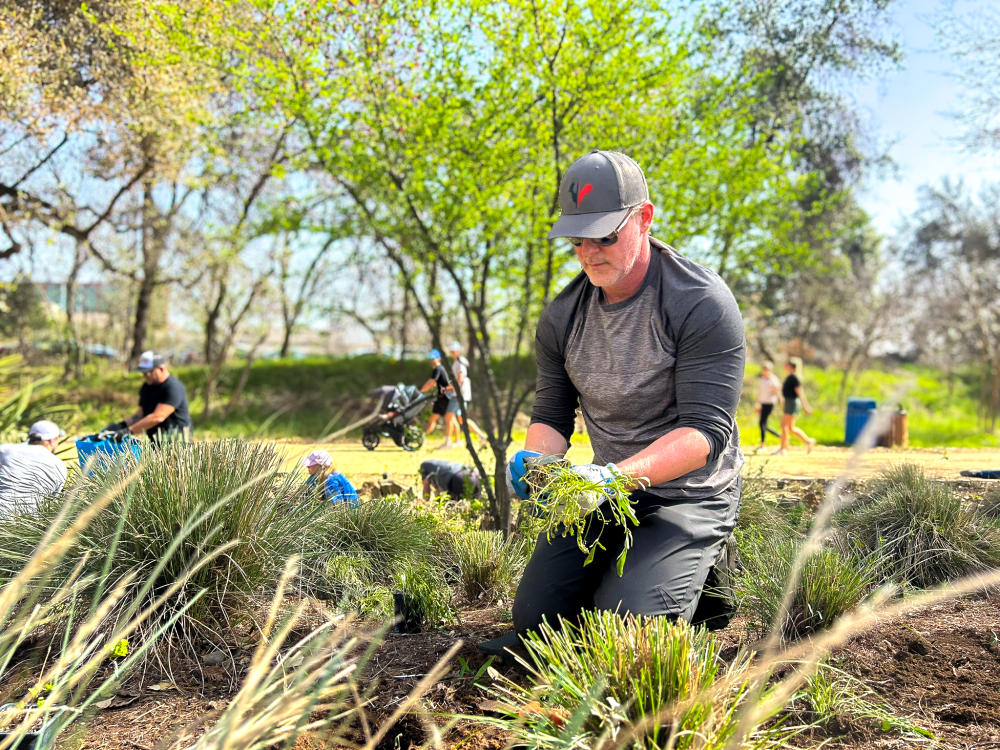
Man kneeling on the ground, removing a plant from a plastic pot to plant into the ground at a park.Courtesy of The Trail Conservancy.

Eco-Conscious

For organizations focused on sustainability and environmental impact, Austin offers hands-on opportunities to make a visible difference.

Keep Austin Beautiful: Participants can roll up their sleeves for litter cleanups or beautification projects that enhance Austin’s public spaces. Activities are easy to scale and teams can immediately see their impact.

The Trail Conservancy: With the Ann and Roy Butler Hike-and-Bike Trail serving Austin’s outdoor spaces along Lady Bird Lake, volunteering with the Conservancy allows attendees to help maintain and improve a beloved community asset. Activities may include landscaping, building gardens and planting native species.

TreeFolks: This nonprofit focuses on reforestation and urban tree planting, giving groups the chance to support Austin’s green canopy. Planting trees offers a long-lasting legacy — one that attendees can revisit for years to come.

Austin Parks Foundation: From mulching and invasive species removal to park improvement projects, the foundation connects volunteers with meaningful work across the city’s park system. Activities are appealing for groups looking to get outdoors while making a positive impact on the environment.
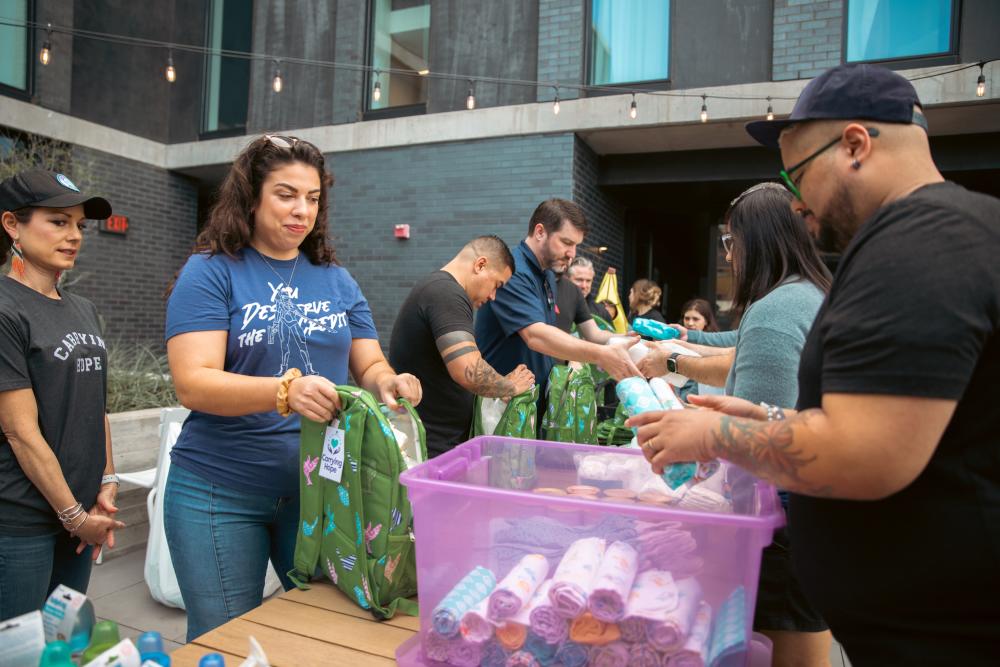
Group of volunteers filling backpacks with care items in an outdoor courtyard.Courtesy Carrying Hope.

Social Impact

Austin offers deeply meaningful ways to support community organizations and vulnerable populations.

Austin Creative Reuse: This nonprofit turns donated materials into creative resources, supporting sustainability and the arts. CSR groups can sort, organize and prepare materials for reuse. It’s an ideal option for teams with a creative edge.

Sammy’s House: Sammy’s House provides early childhood education and therapy services. Volunteer opportunities may include assembling kits, organizing supplies or supporting facility improvements. The projects directly benefit local children and their families.

Carrying Hope: Dedicated to helping children in foster care, Carrying Hope organizes essential supplies and comfort items for kids entering the system. Corporate groups can assemble backpacks, hygiene kits or care packages.

Woman inspecting a carton of eggs before putting them in a cardboard box in her car.
Courtesy Keep Austin Fed.

Culinary Sustainability and Food Security

Food-focused CSR activities are especially popular, offering a hands-on, high-energy environment that naturally encourages collaboration.

Central Texas Food Bank: One of the largest hunger relief organizations in the region, the Central Texas Food Bank provides large-scale volunteer opportunities for groups to sort, package and distribute food.

Keep Austin Fed: With a mission to reduce food waste and hunger simultaneously, Keep Austin Fed rescues surplus food and redistributes it to those in need. CSR participants can assist with sorting and organizing donations.

DMC Partners: Your Secret Weapon

Back to Top of List

Good news for planners — you don’t have to build these programs from scratch. In Austin, Destination Management Companies (DMCs) act as a bridge between corporate goals and local needs to transform good intentions into high-impact experiences.

Local DMCs like Hosts Texas and Austin Detours have long-standing relationships with Austin’s nonprofit community. They understand where help is needed most — such as which park needs mulching this month or what food bank is currently over capacity — and can match your group with the right organization at the right time.

CSR events come with unique operational needs, from transportation to scheduling. A DMC handles these complexities, ensuring a smooth experience from your meeting venue to the volunteer site.

Perhaps most importantly, DMCs know how to elevate CSR activities beyond basic volunteerism. Want to turn a cleanup into a team building competition? Add a leaderboard, prizes or themed challenges. Interested in pairing a morning of service with an exclusive barbecue and live music at a ranch in the Texas Hill Country? A DMC can coordinate these elements to create a program that feels like a premium experience, not an obligation.

Measuring Impact: ROI that Matters

Back to Top of List

For meeting planners and stakeholders alike, CSR isn’t just about doing good — it’s about demonstrating measurable value and a Social Return on Investment (SROI), quantifying the impact of CSR activities versus the cost.

Social Return on Investment

SROI is more than the value of a dollar or hours contributed. Rather than focusing solely on volunteer hours, planners can measure outcomes. For example, packing 50 meal kits might save a nonprofit $300 in labor and sourcing costs. Many Austin nonprofits are equipped to provide these impact metrics, helping planners tell a compelling story to leadership and stakeholders.

Retention & Engagement

CSR activities benefit the community, but they also have a measurable impact on attendees.

A 2025 study published in the Journal of Accounting, Business and Management found that corporate social responsibility is a key driver of employee retention, particularly among younger generations.

Millennials and Gen Z employees place a high value on green initiatives and environmental responsibility. Incorporating sustainability-focused activities — like tree planting or park restoration — can directly support retention goals by aligning with causes these audiences care about most.

When employees see their organization making a positive impact, they feel more connected and valued. This sense of purpose translates into higher motivation, stronger engagement and increased productivity. For meeting planners, integrating CSR into an event agenda is a tangible way to demonstrate this impact to attendees.