Austin has 180 sites on the National Register of Historic Places — here's how to explore them.
Austin gets most of its press for live music and barbecue, but the city has been accumulating stories since 1839, when it was carved out of the Texas hill country to serve as the capital of a brand-new republic. That history is still here, legible in granite and limestone, in museum collections and old street grids, in neighborhoods that have been around long enough to have their own distinct personalities. If you want to understand what makes Austin Austin, start here.
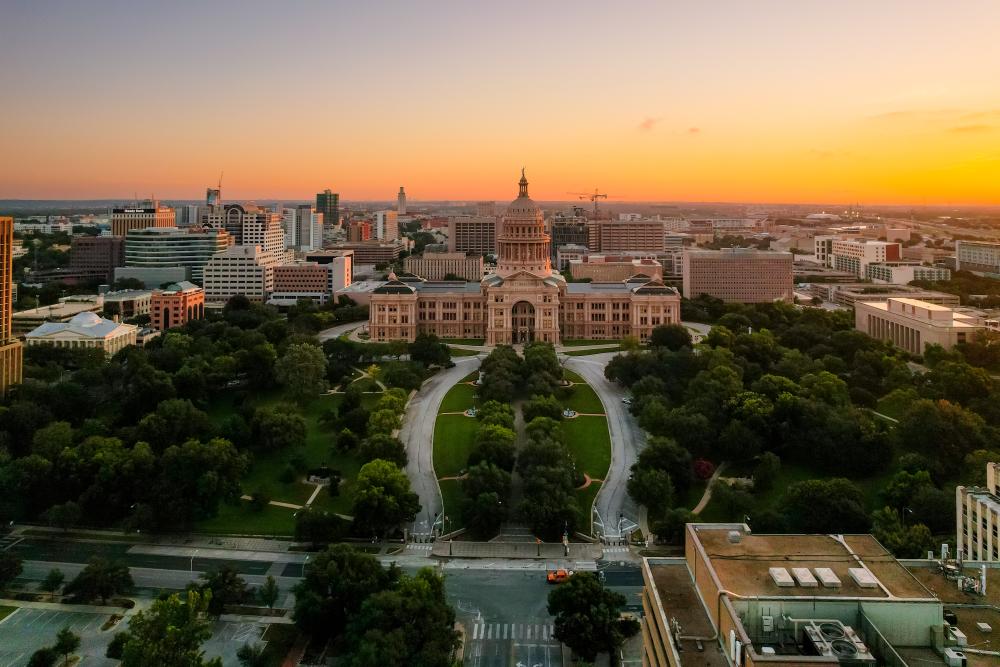 Texas State Capitol Building. Credit David Aguilar.
The Texas State Capitol & Capitol Complex
The Texas State Capitol is the obvious anchor of any historic tour, and it earns the attention. At 302 feet tall (14 feet taller than the U.S. Capitol) it's built from Sunset Red Texas granite quarried near Marble Falls and topped by a cast-iron dome and the Goddess of Liberty. Free guided tours run throughout the day and are genuinely engaging; the docents know their history.
On the southeast corner of the Capitol grounds, the Capitol Visitors Center occupies the 1857 General Land Office building, one of the oldest government buildings in Texas. It's now a free museum with exhibits covering Texas history from the Republic era forward — a good primer before you head deeper into the city.
Don't overlook the Texas Governor's Mansion, a Greek Revival home dating to 1856 that has housed every Texas governor since Sam Houston. Free tours are available on a limited basis; check ahead for current hours and reservation requirements.
The Bullock Texas State History Museum
A block north of the Capitol sits The Bullock Museum, Austin's most comprehensive history museum, and it's one of the best in the state. Three floors of interactive galleries walk you through the full arc of Texas history — from Native American cultures and Spanish colonization through the Republic of Texas, statehood, and the modern era. The IMAX Theatre is the only IMAX with Laser in Texas, and the Texas Spirit Theater puts on an immersive short film worth catching.
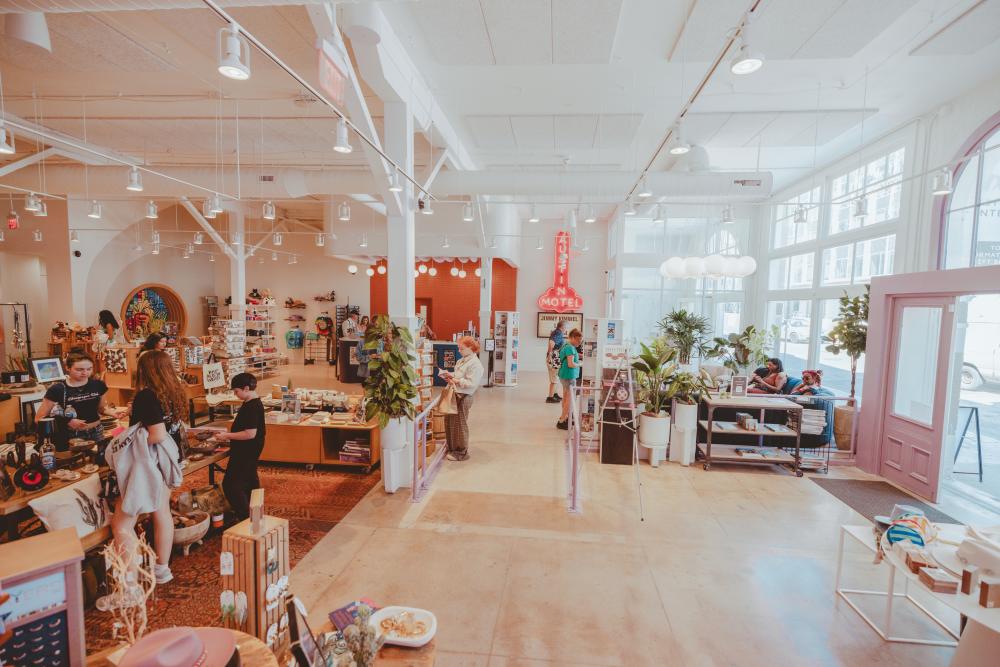 Austin Visitor Center. Credit to Paulina Skarbowska Wiewior, @bateyes.atx.
Congress Avenue (Downtown)
Congress Avenue is a mile-long downtown anchor that runs from the Colorado River straight to the Capitol steps and was laid out in 1839 by Mirabeau Lamar, the second president of the Republic of Texas. He envisioned a 120-foot-wide ceremonial boulevard worthy of a new nation's capital. It's been the site of everything from inaugural parades to political protests to one of the most famous bat colonies in North America.
At its south end, the Ann W. Richards Congress Avenue Bridge is home to roughly 1.5 million Mexican free-tailed bats from spring through fall (typically late March through October). Evening emergences draw big crowds — arrive 20–30 minutes before sunset for a good spot along the railing.
Along the avenue itself, look for the Paramount Theatre (1915), one of Austin's oldest performing arts venues and still an active concert hall; the Scarbrough Building (1910), the city's first skyscraper; and the Littlefield Building (1910, now the Austin Visitor Center), with its ornate terracotta facade. The Old Bakery & Emporium was built in 1876, and is now an art gallery featuring works from local artists ages 50+.
Old East Austin & the French Legation
Just east of downtown, across I-35, the neighborhood known as Old East Austin has a long history that predates the highway that now bisects it. The Texas State Cemetery on Navasota Street is the burial ground for Texas governors, veterans, and notable state figures. The grounds are free, open daily, and moving to walk through.
The French Legation State Historic Site is the oldest standing wood-frame structure in Austin. Built in 1841 as the residence for Alphonse Dubois, France's diplomatic representative to the Republic of Texas, it's a small Creole-style cottage set on two and a half acres with formal gardens and a reconstructed detached kitchen. Guided tours run Tuesday through Saturday. It's easy to walk past without knowing what it is, which is exactly why you should stop.
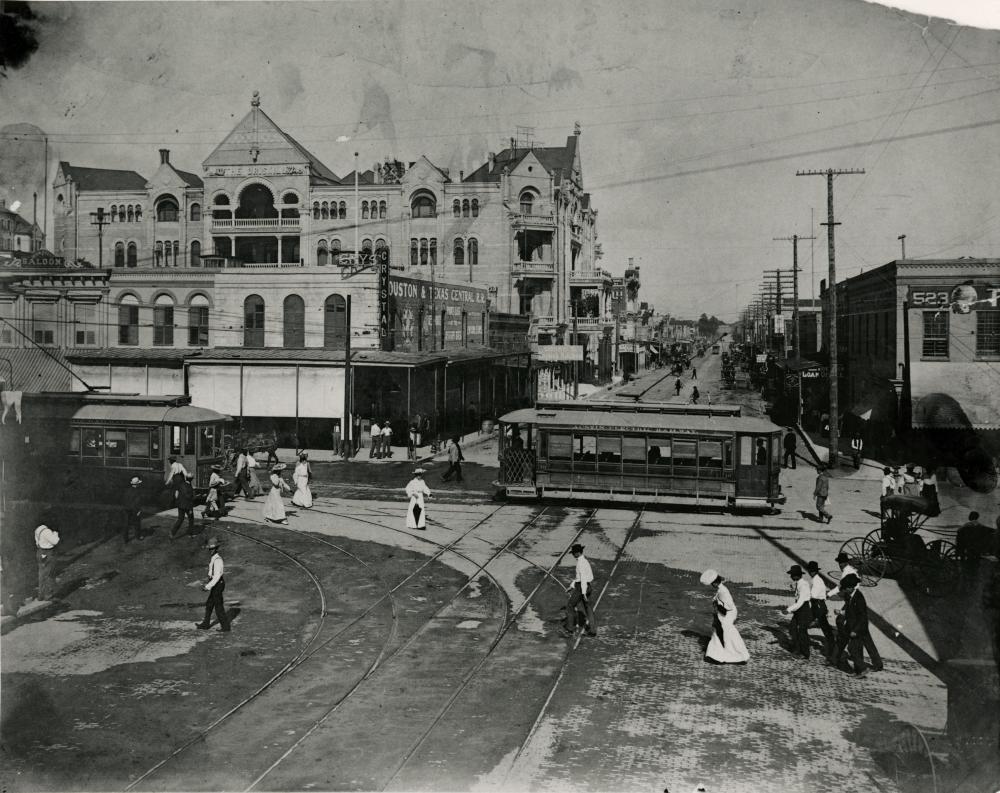 Historic Sixth Street and the Driskill Hotel. C00146, Austin History Center, Austin Public Library.
Historic Sixth Street & Brush Square
Sixth Street is a National Register Historic District, six blocks of Victorian-era commercial buildings dating to the late 1800s. Before the music clubs moved in, the stretch was a densely layered commercial district with owners from across Europe, the Middle East, and Asia.
The Driskill Hotel at the corner of Sixth and Brazos Streets opened in 1886 and remains one of Austin's grandest landmarks. Even if you're not staying here, step inside for a drink in the bar. The lobby's architecture alone is worth the stop.
One block north on East Fifth, Brush Square is home to two free and often-overlooked museums tucked behind heritage oaks:
- The O. Henry Museum chronicles the Austin years of William Sydney Porter (the short story writer who adopted the pen name O. Henry) before his famous prison stint in Ohio. The museum reopened after a multi-year restoration and is open Wednesday through Sunday, noon to 5pm.
- The Susanna Dickinson Museum preserves the 1869 home of one of the only Anglo adult survivors of the Battle of the Alamo. Susanna Dickinson's account of the siege is one of the primary historical records of that event.
Downtown West: The Bremond Block & Austin History Center
The west side of downtown holds a quieter kind of history. The Bremond Block National Historic District, on West Seventh between Guadalupe and San Antonio, is a preserved cluster of Victorian homes built in the 1870s and 1880s for a network of intermarried Austin merchant families. They commissioned some of the finest residential architecture of their era — and then largely kept the block intact. It's a remarkable survivor in a city that tends to bulldoze its past.
Nearby, the Austin History Center in the 1933 Carnegie Library building on Ninth Street houses one of the most significant archives of local history in Texas, including a photo collection that spans from the 1800s to the present. The building itself — with its frescoes, carved wood details, and WPA-era craftsmanship — is worth seeing. Free and open to the public.
A block away, the Heman Marion Sweatt Travis County Courthouse marks the site where Sweatt, backed by the NAACP and argued by Thurgood Marshall, sued the University of Texas in 1946 after being denied admission to its law school. The case went to the Supreme Court, which ruled in Sweatt's favor in 1950 — a landmark decision in the long road toward Brown v. Board of Education.
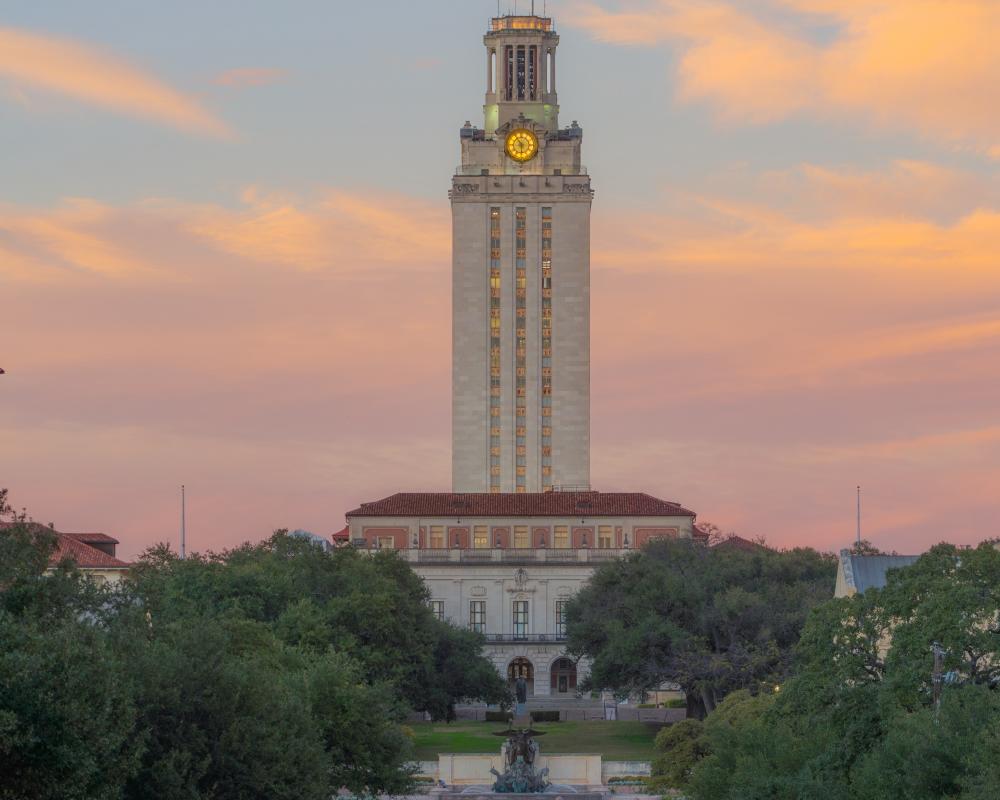 UT Tower. Credit Erin Newman-Mitchell.
The University of Texas at Austin
Founded in 1883, UT Austin has its own historic layer worth exploring. Architect Cass Gilbert and later Paul Philippe Cret shaped the campus's signature look: limestone walls, red tile roofs, and Spanish-Mediterranean detailing. The UT Tower, completed in 1937, remains the symbolic center of campus, and the tower lighting system that signals athletic victories and academic honors has been a tradition for generations.
The campus museums alone could fill a full day:
- Harry Ransom Center — one of the premier humanities research libraries in the world, with a Gutenberg Bible, original manuscripts, and rotating public exhibitions. Free admission.
- Blanton Museum of Art — the largest university art museum in the U.S., with particular strength in Latin American art and a stunning permanent collection. Admission charged; free on certain days.
- LBJ Presidential Library and Museum — eight floors documenting the presidency of Lyndon B. Johnson, including civil rights legislation, the Vietnam War, and the Great Society programs. Free admission.
- Texas Science & Natural History Museum — permanent natural history collections plus a paleontology hall. Great for families.
Hyde Park
Austin's first suburb, developed in the 1890s when streetcar service made it reachable from downtown, Hyde Park is now considered central, but it still feels like a neighborhood with roots. The shady streets lined with Victorian and Craftsman bungalows are some of the most walkable blocks in the city.
The Elisabet Ney Museum on Avenue H is housed in the actual studio of sculptor Elisabet Ney, a German-born artist who moved to Austin in the 1890s and became a prominent figure in Texas cultural life. Her plaster casts and marble portraits, including her famous statues of Sam Houston and Stephen F. Austin, are displayed in the space where she made them. Free admission, open Wednesday through Sunday.
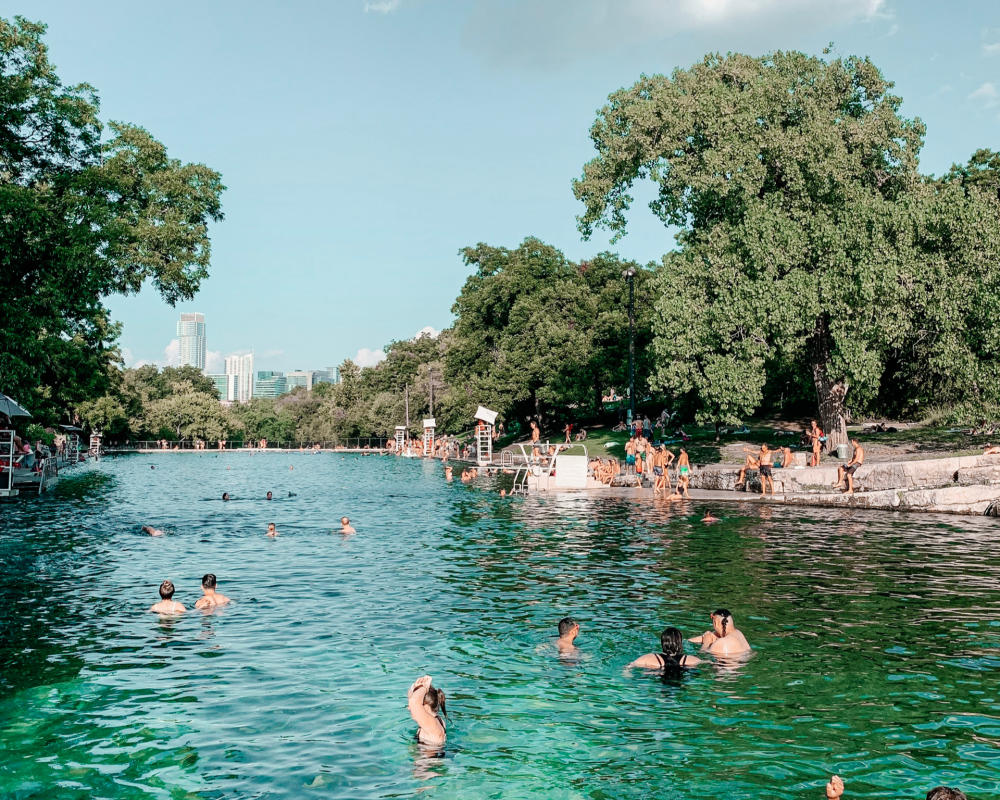 Barton Springs Pool. Credit Cindy Bolanos.
Zilker Park & Barton Springs Pool
Zilker Metropolitan Park, a 350-acre greenspace in the heart of the city, owes its existence to Andrew Jackson Zilker, a businessman who donated the land to Austin in the early 1900s. It's home to Barton Springs Pool — a three-acre, spring-fed swimming hole that has been part of Austin life since long before the city was incorporated. The spring maintains a constant 68°F year-round, which makes it genuinely refreshing in summer and bracingly cold in winter.
The park itself has layers of history: look for the UMLAUF Sculpture Garden, which occupies the former studio of sculptor Charles Umlauf and displays more than 130 works in a garden setting.
Lady Bird Lake & South Congress
Lady Bird Lake (originally Town Lake, renamed in 2007 to honor former First Lady Lady Bird Johnson) was created in 1960 by a low-water dam on the Colorado River. The Ann and Roy Butler Hike-and-Bike Trail surrounds its ten-mile shoreline and is one of the most popular outdoor destinations in the city. You'll find kayakers, paddleboarders, and runners out there at all hours.
South of the lake, South Congress Avenue developed in the 1930s as a strip of modest commercial buildings, like motor courts, diners, and small shops, serving travelers on the old highway south. Today the buildings house a mix of independent boutiques, restaurants, and the iconic Continental Club, which opened as a supper club in 1955 and has been a cornerstone of Austin's live music scene since the 1970s.
Plan Your Historic Austin Visit
Downtown walking tours are a great way to cover multiple historic sites efficiently. The Austin Visitor Center has maps, tour options, and staff who can help you prioritize based on your interests.
Most of these sites are clustered — the Capitol, Bullock Museum, Governor's Mansion, and Congress Avenue are all within easy walking distance of each other. Brush Square is a short walk from Sixth Street. Hyde Park and UT Austin are about two miles north.
Free doesn't mean less interesting! The O. Henry Museum, Susanna Dickinson Museum, Harry Ransom Center, LBJ Library, Elisabet Ney Museum, Austin History Center, and Texas State Cemetery are all free. Some of the best historic experiences in Austin cost nothing.
Looking for a guided experience? The Austin Visitor Center offers downtown walking tours that cover the Capitol area and Congress Avenue with knowledgeable local guides.