The Texas Chain Saw Massacre
The Film that Reinvented Horror
Tobe Hooper's $140,000 film upended the horror genre and put Central Texas permanently on the cinematic map. The real locations — a cemetery in Leander, a gas station near Bastrop, a farmhouse now in Kingsland — are all still there.
Details: Bryanston Distributing Company / Rated R / 83 minutes
Director: Tobe Hooper
Cast: Marilyn Burns, Paul A. Partain, William Vail, Allen Danziger, Teri McMinn, Edwin Neal, and Gunnar Hansen
Stream it: The Texas Chain Saw Massacre
Genre
Horror, Crime, Thriller
Box Office
$30M+ on $140K budget
Location Range
20-90 mi from Austin
About The Film
Shot in the summer of 1973 by University of Texas film school graduate Tobe Hooper, The Texas Chain Saw Massacre was conceived as a low-budget exploitation film but became something far more unsettling — a sweat-drenched fever dream that horror directors have been trying to replicate ever since. Hooper and co-writer Kim Henkel drew on real anxieties: the Watergate era, the energy crisis and reports of Ed Gein. The film's grimy, documentary feel (shot on 16mm, blown up to 35mm for theatrical release) made audiences genuinely uncertain whether what they were watching was real.
What's remarkable is how little of it was purpose built for the production. The farmhouse was a real structure in Round Rock; the cemetery was a real cemetery in Leander; the gas station was a working gas station near Bastrop. The horror is inseparable from the landscape, and that landscape is some of the most visited by movie fans and tourists.
The Texas Chain Saw Massacre tells the frightening story of five friends (Marilyn Burns, Paul A. Partain, William Vail, Allen Danziger and Teri McMinn) on a road trip to a Texas homestead who, instead, end up falling victim to a family of cannibalistic psychopaths and must survive the terror of one of cinema’s most infamous characters—Leatherface (Gunnar Hansen).
Filming Locations
Opening Scene
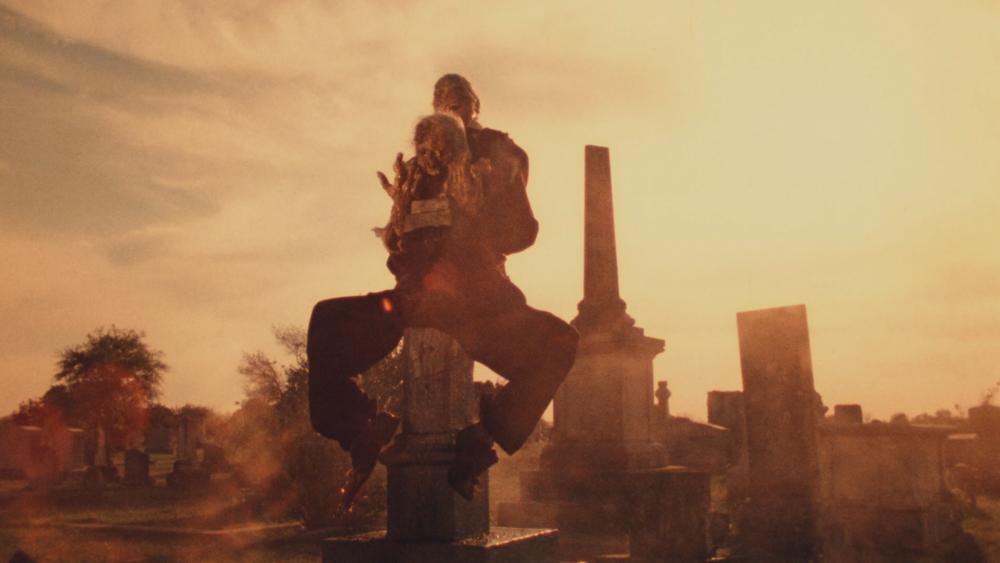
Bagdad Cemetery
The film opens up with a gruesome shot of desecrated corpses mounted on a tombstone in a cemetery. Later, Sally (Burns) and Franklin (Partain) visit the cemetery to check on their grandfather’s grave. The tombstone with the defiled corpses was just a prop for the movie, but the taller grave marker behind the props is still visible in the center of the cemetery.
Today: An active cemetery. Visit respectfully; it's a quiet rural site. The headstone from the opening sequence is identifiable to fans who know what to look for. No admission fee; no formal visitor facilities.
Address: 400 N Bagdad Rd, Leander, TX 78641 · ~35 min from Austin
ACT 1 | The Warning
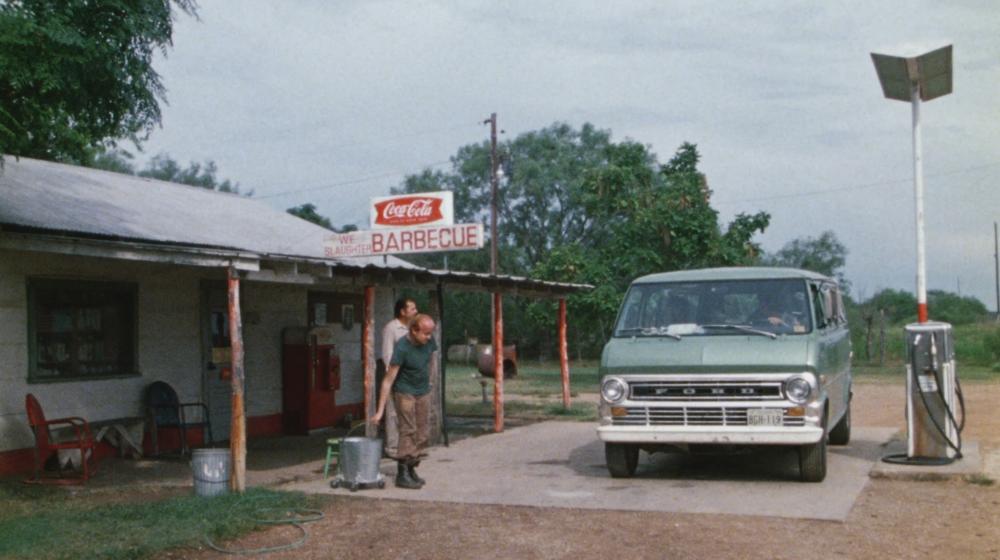
We Slaughter Barbeque (former gas station)
After a frightening encounter with a hitchhiker (Neal), the group (Burns, Partain, Vail, Danziger & McMinn) stops at a nearby gas station hoping to refuel. The ominous gas station owner warns them off — one of the film's most famous scenes. The building has been repurposed and is now one of the most visitor-friendly spots on the TCM trail.
Today: Now operating as We Slaughter Barbeque — a gift shop and barbecue restaurant that leans fully into its cinematic history. A replica of the film's green van is parked outside. Worth a meal and a browse through the merch.
Address: 1073 TX-304, Bastrop, TX 78602 · ~40 min from Austin
ACT 2-3 | The House
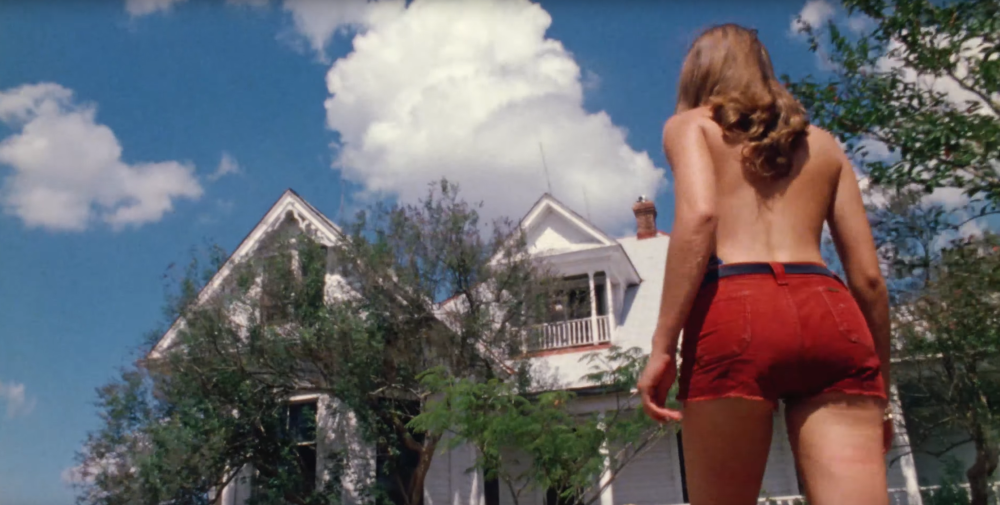
Leatherface's Family House
The film's central location is a rambling, sun-baked farmhouse where Leatherface's family lived. Originally sited in Round Rock's Quick Hill neighborhood, the structure was physically relocated in 1998 to Kingsland, where it was integrated into a restaurant complex.
Today: The house is now Hooper's in Kingsland. You can dine inside the original structure — the exterior Victorian detailing is unmistakable to anyone who's seen the film. Confirm hours before making the trip; it's the furthest of the three locations from Austin.
Address: 1010 King Court, Kingsland, TX 78639 · ~85 min from Austin
Iconic Filming Locations Map
Production & Legacy
How it was made and what it became
The Shoot
Principal photography ran through the summer of 1973 in brutal heat. The cast and crew lived together at the farmhouse location. The practical conditions (real heat, real sweat, the actual smell of the set) made their way into every frame. The film was shot on 16mm over 13 days, then blown up to 35mm for theatrical release.
The Impact
One of the most profitable films ever made relative to its budget, TCM invented the conventions that would define horror cinema for decades: the isolated rural setting, the final girl, the unstoppable masked killer. Hooper and Henkel went on to film TCM 2 in Austin as well.
Plan Your Visit
The three main TCM locations span a roughly 90-mile radius from Austin. You can realistically visit all three in a single day, though the Kingsland house is a longer commitment. A suggested route: start in Leander (cemetery), head southeast to Bastrop (gas station / We Slaughter BBQ — make this your lunch stop), then decide whether to continue to Kingsland or save it for another trip.
Bastrop, TX
Bastrop is 40 minutes southeast of Austin and worth the day-trip. The historic downtown has good food, antique shops and access to Bastrop State Park.
Texas Chain Saw Massacre 2 Locations
Tobe Hooper turned to Austin in 1986 to film the sequel, which used several Austin lcoations. See the Texas Chain Saw Massacre 2 guide for the full list
Also Filmed in Austin You Might Also Visit
1986 Texas Chain Saw Massacre 2
The sequel brought Hooper back to Austin — this time to downtown locations including the Promenade.
2007 Grindhouse: Planet Terror
Robert Rodriguez's horror homage used many South Austin locations.
1984 Blood Simple
The Coens' debut crime/thriller. Mount Bonnell appears in an early scene.


